Last Saturday, a guy in my neighborhood pulled into the driveway in a red Honda S2000 and asked whether he should trade it for a Mazda Miata. He had already made the classic mistake: comparing horsepower before comparing the receipt. The Miata vs S2000 question is not really about which car wins a stoplight argument. It is about what you want to pay, repair, insure, and live with when the weather turns hot and your back starts complaining.
I sold cars for twelve years. I also spend enough time around old machinery to know that a clean, simple car can be worth more than a newer car with a longer options list. Here is the straight version of Miata vs S2000, without the dealership speech.
The money comes first
A used Mazda Miata usually gives you more choices. You can find older NA and NB cars at lower prices, while NC and ND models tend to cost more because they are newer and easier to use every day. A rough market range is $7,000 to $15,000 for a decent older example and $18,000 to $35,000 for a later car, depending on mileage, condition, transmission, and rust.
The Honda S2000 lives in a different part of the receipt. Clean AP1 and AP2 examples commonly sit around $20,000 to $40,000, with exceptional low-mileage cars priced higher. You are paying for the engine, the reputation, and the fact that Honda stopped building them years ago. A $25,000 S2000 is not automatically a better purchase than a $12,000 Miata. It is simply a more expensive mistake if the previous owner neglected it.
In the Miata vs S2000 matchup, the Miata usually wins the entry price. That leaves money for tires, a quality inspection, and the emergency fund you should have before buying any twenty-year-old sports car.
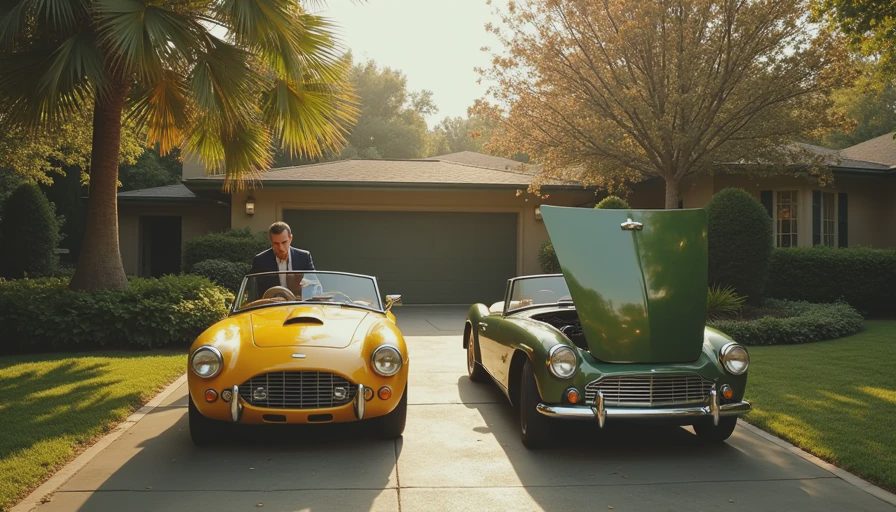
How they feel from the driver's seat
The Miata is light, communicative, and friendly at normal speeds. You can enjoy it on a back road without driving like you are auditioning for a police report. The steering talks to you. The manual gearbox is easy to work. The suspension gives you enough feedback to understand what the tires are doing.
The S2000 feels sharper and more serious. Its four-cylinder engine loves revs, particularly in the AP1 cars, and the rear-drive chassis rewards a driver who is paying attention. Below the power band, it can feel ordinary. Higher in the rev range, it becomes the reason people still talk about this car in parking lots.
That difference matters. If your fun means an evening cruise, a Miata gives you more usable enjoyment at lower speeds. If your fun means planning your route around corners and listening to the engine climb, the S2000 has more drama. The Miata vs S2000 choice comes down to whether you want a playful tool or a small event every time you start the car.
Neither car is a comfortable substitute for a family sedan. The Miata has limited trunk space and almost no cabin storage. The S2000 is just as impractical, with a small trunk and a cockpit that feels narrow for taller drivers. Sit in both before you hand over money. A sales listing cannot tell you where your left knee will hit the dash.
Reliability is about condition, not mythology
People call the Miata bulletproof, but that word has sold plenty of bad cars. Older Miatas can have rust in the rocker panels, rear wheel arches, and front frame rails. A soft top can cost roughly $800 to $1,500 to replace, depending on the material and labor. Cooling-system parts are affordable, but deferred maintenance can turn several small jobs into a $2,000 weekend.
The S2000 has a strong engine reputation, yet it is not a magic box. Check for oil consumption, evidence of track use, worn suspension bushings, clutch wear, and accident repairs. A clutch job can run about $1,200 to $2,000. A tired differential, damaged wheels, or neglected brakes can add several hundred dollars before you have driven home.
This is where the Miata vs S2000 debate gets practical. Pay $150 to $250 for a pre-purchase inspection from a shop that knows the model. Ask for a lift inspection, compression or leak-down testing when appropriate, fluid checks, and a scan for stored fault codes. That inspection can save you from buying a car that looks clean because the bad parts are underneath.
Insurance, tires, and the cost of using it
Insurers price these cars based on driver profile, location, coverage, mileage, claims history, and repair exposure. An S2000 can cost more to insure than a Miata because replacement values are higher and performance-car claims are viewed differently. Get quotes using the vehicle identification number before you negotiate the purchase price.
Do not save $400 on the car and then install bargain tires. A Miata on good 195- or 205-section tires can be wonderfully balanced. The S2000 also depends heavily on tire condition, alignment, and suspension health. A set of quality tires may run $500 to $900, with performance sizes sometimes higher.
If the car is a weekend vehicle, ask about agreed-value or mileage-limited policies where available. Do not assume a standard policy will automatically pay what a rare, modified, or carefully restored car is worth. Collision and comprehensive coverage also carry deductibles, so a $1,000 deductible is not the same financial decision as a $250 deductible.

Which one makes sense for your driveway?
Choose the Miata if you want the lower purchase price, easier parts availability, a larger supply of cars, and a roadster that stays entertaining without requiring heroic speeds. It is also the safer starting point for a first-time enthusiast who needs to leave room in the budget for maintenance.
Choose the S2000 if the engine character is the whole point, you appreciate a higher-revving driving experience, and you can afford to buy condition rather than simply buying the cheapest listing. A clean, stock car with service records is worth more than a modified bargain with five owners and a story about how it was “barely driven.”
In a direct Miata vs S2000 comparison, the Honda feels more special and the Mazda feels easier to recommend. That is not an insult to the Honda. It is a warning about budget. If your total budget is $18,000, a $16,000 S2000 leaves you exposed. An $11,000 Miata leaves $7,000 for tires, a roof, brakes, insurance, and repairs.
Your inspection and buying checklist
Before you buy either car, do the same five things. First, get an insurance quote with the exact year and VIN. Second, inspect the cold start; let the seller start the engine while you are present. Third, look underneath for rust, leaks, bent metal, and fresh undercoating hiding repairs. Fourth, drive the car long enough to test highway tracking, clutch engagement, braking, cooling, and convertible-top operation. Fifth, compare the service records with the odometer instead of trusting a verbal promise.
Ask the seller why the car is being sold. Then listen to the pause after the answer. Ask whether the title is clear, whether the car has been tracked, and whether the modifications are documented. A roll bar, intake, exhaust, coilovers, or aftermarket wheels are not automatically bad, but they change the inspection and insurance conversation.
The Miata vs S2000 answer is simple once you stop shopping for bragging rights. Buy the cleaner car you can afford to maintain, not the faster car you can barely afford to purchase. Take the inspection report, insurance quote, and total first-year budget with you. Next time a seller shows you a monthly payment or says a rare car will not last until tomorrow, ask to see the title, the service records, and the inspection results. I told you what they told me to say. Now you know.




No letters yet — pray write the first.