Last Saturday, a guy pulled his Volkswagen GTI into my driveway and asked whether a muffler delete would make his car sound like a Golf R. He had watched three short videos, heard one loud cold start, and was ready to hand a shop $250. I told him to wait before spending the money. An mk7 gti muffler delete can change the character of the car, but it does not magically turn the factory turbo four-cylinder into a different engine.
The honest version is simpler. You remove the rear muffler, replace it with straight tubing or a small section of pipe, and gain volume. You usually keep the catalytic converter, downpipe, oxygen sensors, and resonator in place. That means the job is less dramatic than a downpipe swap, but the result still deserves a little planning.
What an mk7 gti muffler delete actually changes
The Mk7 GTI uses a rear muffler to reduce exhaust noise after the gases pass through the rest of the system. Removing that muffler lets more of the engine and exhaust pulses reach the tailpipes. At idle, the difference can be modest. Under throttle, the car sounds sharper and more present. Cold starts are usually the part your neighbors notice first.
You should not expect a major horsepower gain from this modification. On a stock turbo and factory downpipe, the change is mainly sound and appearance. The car may feel more exciting because you can hear it working, but that is not the same as adding measurable power. The factory exhaust valves can also affect how the car sounds, especially on GTI models equipped with the optional performance package.
There is another detail people skip in videos: muffler-delete pipes vary. A cheap pipe with thin welds can rattle against a hanger or buzz against the heat shield. A properly fitted axle-back section should follow the factory routing and use the original mounting points. That difference matters more than the logo printed on the box.

What it costs, from the driveway to a real exhaust shop
A basic pipe kit commonly lands around $100 to $250. A shop may charge roughly $100 to $250 for installation, depending on whether the factory muffler is cut out or unbolted and how much cleanup the technician has to do. So the realistic total for an mk7 gti muffler delete is often $200 to $500 before tax.
The fake bargain is a $79 universal pipe that becomes a $400 repair after poor alignment, leaks, or damaged clamps. You are not just buying metal. You are paying for diameter, fitment, hangers, weld quality, and the technician’s time. Ask whether the original muffler can be saved. If the answer is no, understand that returning the car to stock later could cost another $150 to $350 for a used or replacement muffler and installation.
A branded axle-back system can cost $500 to $1,200. That sounds steep next to a simple delete, but some systems include polished tips, better fitment, a resonated section, and a design that is easier to reverse. If you plan to sell the GTI in two years, reversibility has a dollar value.
The drone problem nobody shows in the short video
Drone is a steady booming vibration that fills the cabin at a particular engine speed. In an Mk7 GTI, you may notice it during highway cruising, often when the engine sits at a consistent rpm in sixth gear or with the DSG holding a tall gear. A phone recording rarely captures that low-frequency pressure. Your ears and your passengers will.
An mk7 gti muffler delete can be perfectly tolerable around town and irritating on a 45-minute commute. The rear seats can feel especially loud because they sit close to the exhaust area. You might also hear more rasp when the car is cold. That does not mean the engine is being harmed, but it can make a daily driver feel cheap instead of sporty.
A resonator helps manage certain harsh frequencies, but it is not a magic silence button. If the car already has an aftermarket downpipe, intake, or louder mid-pipe, removing the muffler adds to the total sound level. Think of exhaust volume as a stack of small changes. The last modification is not operating in isolation.
Sound choices that make more sense
If you want a louder GTI without committing to the cheapest option, compare three routes. A resonated axle-back gives you more volume while controlling some rasp. A valved exhaust can stay quieter during neighborhood driving and open up under heavier throttle. A larger rear muffler with freer-flowing internals can add tone without creating as much cabin boom.
The best choice depends on how you use the car. For a weekend GTI, an unresonated delete may be entertaining. For a commuter carrying children, coworkers, or a spouse, a resonated system usually earns its extra cost. For a leased car, a bolt-on axle-back is easier to remove than a welded pipe.
Listen to full-length driving clips, not only cold starts. Search for interior recordings at 2,000, 2,500, and 3,000 rpm. Those clips tell you more than a parking-lot rev. Also ask the installer whether the tips sit centered in the valance. A pipe that hangs low makes an otherwise good car look unfinished.
Fitment, legality, and insurance questions
Before ordering, confirm your GTI’s model year, body style, exhaust valve setup, and whether the kit is designed for the original rear section. The Mk7 platform covers several years, and parts advertised as universal may need cutting or extra adapters. A clean installation should not leak, touch the bumper, or place tension on the rubber hangers.
A rear muffler is generally not the emissions-control part people worry about, but noise laws still exist and enforcement varies by location. A loud exhaust can also create problems during inspection in places with visual or sound requirements. Keep the factory parts in your garage if you can. They are worth more to you than they are to a scrap buyer.
Tell your auto insurer about permanent performance or exhaust modifications when the policy requires disclosure. A muffler change usually will not transform a normal policy, but an undisclosed modification can complicate a claim if the insurer asks for a complete vehicle description. Do not assume that coverage for a modified car automatically includes every aftermarket part. Ask whether custom parts coverage applies and what limit is available.
The math before you cut the factory system
Here is the driveway calculation. A $180 delete kit, $175 for labor, $20 in clamps, and about $40 in tax puts the job near $415. If you dislike the drone and pay $300 to reinstall a used muffler, your temporary experiment cost $715. A $650 resonated axle-back may have been cheaper from the beginning, especially if it can be sold used later.
That does not make the delete a bad idea. It makes the cheap version less cheap than the receipt suggests. You need to decide whether your goal is maximum noise, a deeper tone, better looks, or simply hearing the turbocharged engine more clearly. Those are different purchases.
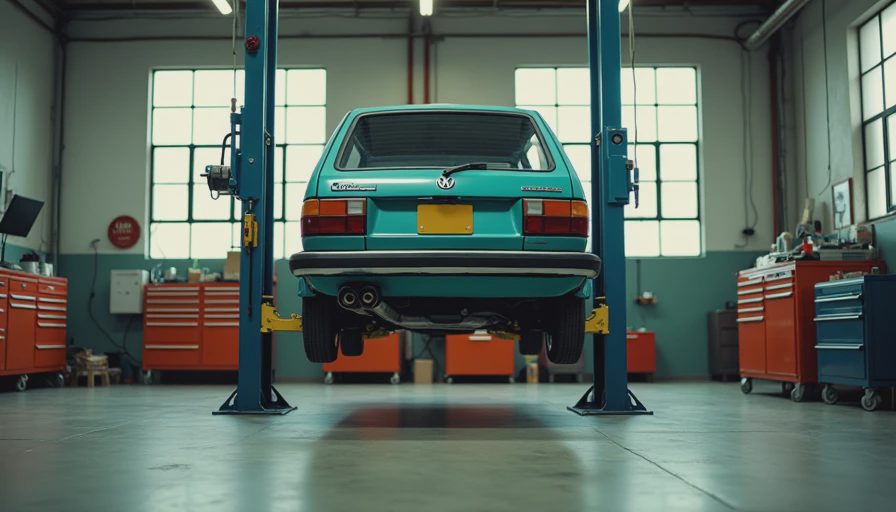
If you proceed, inspect the welds, confirm the pipe diameter, ask for a leak check, and take a highway drive before approving the final payment. Let the exhaust cool before touching anything. Keep the receipt and the removed parts. Take a photo of the installed hangers and tips while the car is on the lift.
What I would do with my own GTI
For a stock daily-driven Mk7 GTI, I would skip the bare pipe and choose a resonated axle-back from a known manufacturer. Brands such as Borla, AWE, MagnaFlow, and Remus offer different levels of volume and fitment, though the exact sound depends on the rest of the exhaust. I would spend the extra money on a system that can come off cleanly.
If your budget is fixed at $250, I would first listen to a similar car in person, then ask a local exhaust shop for a quote using quality tubing and proper hangers. Do not let someone cut the factory system before you understand how much a stock replacement will cost.
Before booking the job, write down your GTI’s year, current exhaust parts, daily mileage, and tolerance for highway drone. Ask the installer what stays in place, whether the factory muffler is returned, and what happens if the tips sit crooked. Then call your insurer and ask how aftermarket exhaust parts are treated under your policy. I told you what they told me to say. Now you know.





No letters yet — pray write the first.