Last Saturday, a man in my driveway showed me a screenshot from a dealership. The salesperson had given him a payment of $489 a month, and he thought he had found his number. He had not. The out the door price was still a mystery because nobody had written down the vehicle cost, taxes, fees, or optional products in one place. That monthly payment could have been stretched over 84 months, with a high interest rate tucked behind it.
When you shop for a car, ask for the out the door price in writing before you talk seriously about payments. That is the amount required to buy the vehicle and drive it away, excluding financing interest and usually excluding your future insurance premium. It gives you a clean number to compare between dealerships. More important, it shows where the money is going.
What the out the door price includes
The starting point is the negotiated selling price of the vehicle. From there, the dealer adds government charges and any products you agree to buy. A typical worksheet can include the vehicle price, destination charge if it was not already included, sales tax, title and registration fees, a documentation fee, and dealer-installed accessories.
Suppose a sedan has a negotiated price of $27,500. Sales tax at 6.25 percent would be about $1,719. Title and registration might add roughly $250, while a $150 documentation fee brings the total to about $29,619. That is the out the door price before a trade-in, down payment, or financing costs.
The exact tax and registration amounts depend on your state and local rules. The important part is that the worksheet names each line. “Fees and taxes” is not a useful line item when it totals $3,400. You want to know whether $1,719 is tax, $250 is registration, and the remaining amount is a dealer fee or an add-on.
A destination charge is not the same thing as a dealer fee. A manufacturer often charges a destination fee to transport a new vehicle. A dealer documentation fee covers dealership paperwork, though the amount can vary widely. Neither line should be allowed to hide a GPS tracker, paint coating, nitrogen tires, or a theft package you never requested.
The add-ons that change the number
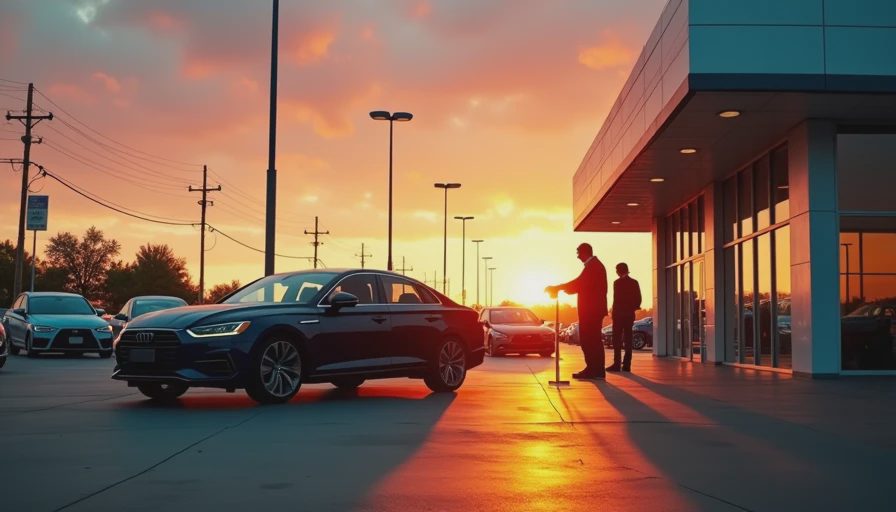
This is where a clean quote can get muddy. A finance manager might present a protection package for $1,295, a key replacement plan for $699, and paint protection for $995. Those products are not automatically worthless, but they are optional in many transactions. If you did not ask for them, remove them from the out the door price.
Here is the math. The sedan at $29,619 becomes $32,608 after those three products. The dealer may describe that as only $47 more per month on a 72-month loan. That description hides the real cost. You are not buying a $47 payment. You are buying $2,989 worth of products, plus interest if they are financed.
Ask the salesperson to print the buyer's order with every add-on removed. Then add back only the item you understand and want. A genuine manufacturer warranty is different from a dealer service contract. A service contract can provide useful coverage, but it has a price, a deductible, exclusions, and an administrator. Read those details before treating it as free protection.
The same rule applies to dealer-installed accessories. Floor mats listed at $199 are one thing. A $1,200 “appearance package” that includes mats, wheel locks, and a bottle of coating deserves a slower look. You are allowed to say you did not come to buy it.
Do not let the monthly payment replace the price
The payment is useful only after you know the out the door price, loan term, APR, and amount financed. A $30,000 purchase with $5,000 down is not comparable to a $30,000 purchase with nothing down. Neither is a 60-month loan comparable to an 84-month loan.
For example, $28,000 financed for 60 months at 7 percent costs about $554 per month before any trade-in effect. Stretch that same balance to 84 months and the payment falls to about $423, but the total interest rises. The lower payment did not make the vehicle cheaper. It simply moved more of the cost into the future.
Tell the dealer, “I am buying based on the out the door price. We can discuss financing after that number is settled.” If the conversation keeps returning to what you can afford each month, bring it back to the written buyer's order. A payment can be adjusted with term length, down payment, APR, or hidden products. The purchase price should stand on its own.
How your trade-in affects the deal
A trade-in changes the amount you finance, but it should not erase the purchase price. Get the trade value separately. You need three numbers: the new vehicle's out the door price, the trade allowance, and the payoff on your current loan.
Imagine the new car's out the door price is $31,400. The dealer offers $12,000 for your trade, but your loan payoff is $14,500. That leaves $2,500 in negative equity. If the dealer rolls it into the new loan, the amount financed can become $33,900 before your down payment. The payment may still look manageable, but you are carrying old debt into the next car.
Ask for a worksheet that shows the trade allowance and payoff on separate lines. If the dealer increases the trade value by $2,000 while increasing the new car price by $2,000, you did not gain $2,000. You watched two numbers move together. The final out the door price and amount financed tell you what actually happened.

Where auto insurance fits into the purchase
Insurance is usually not part of the dealer's out the door price, but it belongs in your purchase budget. Before you sign, call your insurer with the vehicle identification number and ask for the new premium. A newer SUV can cost more to insure than the compact sedan it replaces, even if the loan payment is similar.
If you finance the vehicle, the lender will usually require collision and comprehensive coverage, along with liability coverage that meets its requirements. Collision helps cover damage from a crash, while comprehensive generally covers non-collision losses such as theft, hail, falling objects, and animal strikes. Your deductible affects the premium and your out-of-pocket cost after a covered claim.
For a practical comparison, get insurance quotes for two or three vehicles before visiting the dealership. A $32,000 crossover with a $185 monthly premium can cost more each month than a $35,000 sedan with a $125 premium. The purchase price is only one piece of the ownership bill. You also need fuel, maintenance, registration, and coverage.
Do not let a dealer sell you insurance products as if they were required by law. Lenders can require coverage on a financed vehicle, but that does not mean you must buy it from the dealership. Compare your existing insurer with quotes from companies such as State Farm, GEICO, Progressive, or a local independent agent.
The five-minute buyer's order check
Before signing, put the paper on the hood and check it line by line. The out the door price should be easy to find, and the arithmetic should work without a salesperson reaching for a calculator.
- Confirm the stock number, VIN, trim, mileage, and vehicle price.
- Check that the sales tax, title, registration, and documentation fee are listed separately.
- Circle every add-on and cross out anything you did not request.
- Confirm the trade allowance, loan payoff, down payment, and amount financed.
- Compare the APR, loan term, and total of payments with the monthly payment.
- Call your insurer before delivery and confirm the new policy cost and required coverage.
Take a photo of the worksheet before you leave. If the final contract contains a product or charge that was not on the negotiated sheet, stop and ask for an explanation. You do not owe anyone a signature because they printed paperwork.
I told you what they told me to say when I was selling cars. Now you know. Next time you walk into a dealership, ask for the out the door price first, in writing, with every fee named. Then compare that number, not the payment, with the next car on your list.




No letters yet — pray write the first.