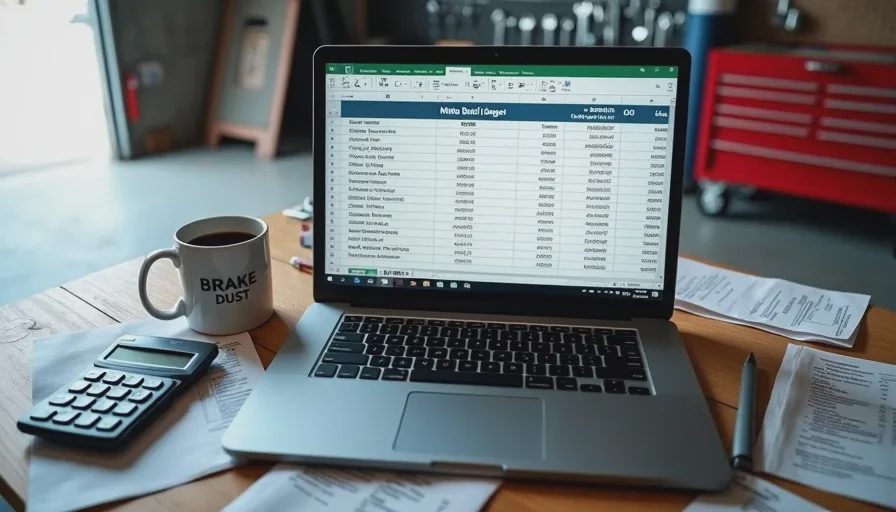
Every year, on January 1st, I open a fresh Excel file. I title it "Miata Build Budget" in bold, 14-point Calibri. I create columns: Date, Part, Vendor, Cost, Category, Notes. I color-code the headers in a tasteful dark blue. I tell myself this is the year I'll track every dollar, every bolt, every unplanned trip to AutoZone because I stripped a fastener and need a replacement before the store closes.
By March, the "Actual" column has gaps. By August, I've stopped categorizing and started dumping numbers into whatever row is closest. By December, the spreadsheet is a monument to my inability to confront the truth. And on January 1st, I delete it and start a new one.
This year, I'm breaking the cycle. I'm going to publish the numbers — the real numbers, the ones that make me flinch — right here, on this blog, where they can't be deleted. This is the NA Miata track build cost spreadsheet, confessed in full. Let's get into it.
The Spreadsheet: A History of Avoidance
Before I show you the numbers, I need to explain why this is so hard for me. I'm a supply chain manager by trade. I spend my working hours optimizing logistics, negotiating vendor contracts, and building forecasting models that predict material costs six quarters out. I'm good at this. I'm the guy who finds $40,000 in annual savings by switching pallet suppliers.
At home, I'm the guy who stopped adding up Miata receipts sometime in 2021 because the number was starting to look like a used Honda Civic and I wasn't emotionally prepared for that conversation — with myself, with Jenn, with anyone who might look at the spreadsheet and say "you spent how much on a thirty-year-old Mazda?"
The avoidance takes specific forms. Here's what I do, and maybe you do too:
The cash purchase doesn't count. I bought a used Racing Beat header from a guy on Facebook Marketplace for $200 cash. I never entered it in the spreadsheet because cash doesn't leave a paper trail and therefore, in some deeply flawed accounting framework, it didn't happen.
The "maintenance" reclassification. Hawk HP+ brake pads: are they a track mod or a maintenance item? They replaced worn-out pads, so technically they're maintenance. I also bought them four months before the old pads were actually worn out because I wanted better bite at Barber. That's a mod. I logged them as maintenance. The spreadsheet knows. I know. We both pretend.
The rounding-down habit. A $247 part becomes "$240." A $1,049 coilover kit becomes "about a grand." The cumulative effect of this rounding, over four years, is probably north of $500. I don't want to know the exact number. That's the point.
The "it was on sale" discount narrative. If a part retails for $400 and I buy it for $350, I didn't spend $350. I saved $50. This is how my brain works. It's not how math works.
Reg has a theory about this. He calls it "the spreadsheet tax." You pay it not in dollars but in willful ignorance. "Nobody tracks everything," he told me once. "The guys who say they do are lying to you or lying to themselves." Reg doesn't use spreadsheets. He has a shoebox full of receipts and a memory that apparently functions like a database. When I asked him how much he'd spent on his personal project car — a 1972 Datsun 240Z with an engine swap he did himself — he thought for a moment and said, "Enough that I don't ask."
That's the thing about building a car. The numbers are never the point. But they're also always there, waiting.
The Confession: What the Spreadsheet Actually Contains
I sat down last Sunday with a shoebox of receipts, three years of credit card statements, and a folder of PayPal transaction emails I'd been avoiding. I rebuilt the spreadsheet from scratch. Here it is, in its entirety.
The Car Itself
Date | Item | Cost | Notes |
|---|---|---|---|
March 2020 | 1994 NA Miata, 1.8L, 112k miles | $4,200 | Bought from a guy in Pelham. Ran rough. Soft top had a hole. I told Jenn it was "a project." She knew. |
I'm not including the purchase price in the build total because the car is the car. The build is everything I've done to it since. This distinction is arbitrary and self-serving. I'm aware of that. We're proceeding anyway.
Suspension & Brakes
Date | Part | Cost | Notes |
|---|---|---|---|
April 2020 | MCS single-adjustable coilovers | $1,895 | The single biggest expense. Worth every dollar. |
May 2020 | Extended lower ball joints | $140 | For camber. Installed myself. Alignment required. |
June 2020 | Hawk HP+ pads (front & rear) | $247 | Squeal in the drive-thru. Stop hard on track. |
June 2020 | Centric blank rotors (front & rear) | $160 | Blank rotors are better than drilled. Fight me. |
July 2020 | Stainless steel brake lines | $95 | Pedal feel improvement, minor but real. |
March 2021 | Alignment (track spec) | $120 | -2.5° front, -2.0° rear. Tire wear is a problem for future Matt. |
August 2022 | Replacement front hubs | $180 | One started making noise after a wet track day. |
April 2023 | New lower control arms (front) | $220 | Bushings were shot. Noticed during a pad change. |
Suspension & Brakes Subtotal: $3,057
Wheels & Tires
Date | Part | Cost | Notes |
|---|---|---|---|
April 2020 | 15x8 Konig Dial-In wheels (4) | $520 | Bronze. Look fantastic. Curb rash on one within six months. |
April 2020 | Toyo R888R tires, 205/50R15 (4) | $640 | First set. Lasted about 8 track days. |
July 2021 | Toyo R888R tires, second set | $660 | Price went up. Noticed. Didn't switch brands. |
March 2022 | Toyo R888R tires, third set | $680 | Price went up again. Starting to feel like a subscription. |
October 2023 | Continental ExtremeContact Sport (street set) | $520 | Bought after the thunderstorm incident. Worth it for wet weather alone. |
Wheels & Tires Subtotal: $3,020
Safety & Interior
Date | Part | Cost | Notes |
|---|---|---|---|
May 2020 | Blackbird Fabworx 4-point roll bar | $895 | Installed with help from Reg. Required cutting the parcel shelf. Permanent modification. |
May 2020 | Sparco Sprint seat (driver) | $380 | Fixed-back. Not comfortable for drives over two hours. |
May 2020 | Seat mounting bracket and slider | $120 | Gave up on sliders after a year. Bolted it to the floor. |
June 2020 | Schroth 4-point harness (driver) | $220 | Not street legal. Don't care. Holds me in place. |
August 2021 | Seat bracket revision (floor-mounted) | $40 | Two pieces of steel, some bolts, an afternoon with a drill. |
Safety & Interior Subtotal: $1,655
Engine & Drivetrain
Date | Part | Cost | Notes |
|---|---|---|---|
June 2020 | Radiator (Koyorad aluminum) | $320 | Preventative. The original plastic end tanks were brown, which means they were about to fail. |
June 2020 | Coolant hoses (full set) | $95 | Did these while the radiator was out. Smart. |
August 2020 | Racing Beat header | $200 | Facebook Marketplace. Cash. The one I didn't log. |
August 2020 | Cat-back exhaust (RoadsterSport 3) | $450 | Bought used. Slight drone at 3,000 RPM. Max says it sounds like a "lawnmower that's mad." |
February 2021 | Lightweight flywheel (Flyin' Miata, 10.3 lb) | $350 | Installed during a clutch job. Revs faster. Chatter at idle. |
February 2021 | Clutch kit (Exedy OEM replacement) | $180 | While you're in there. |
March 2022 | Torsen LSD (4.1 ratio, used) | $700 | Swapped from open diff. Most transformative mod after the coilovers. |
October 2023 | Replacement IAC valve (used) | $15 | Reg's diagnosis. The lying valve. |
Various | Oil changes (Mobil 1 10W-30, ~8 changes) | $320 | Every three track days or 3,000 miles, whichever comes first. Usually track days. |
Engine & Drivetrain Subtotal: $2,630
The Small Stuff I Always Forget
Date | Part | Cost | Notes |
|---|---|---|---|
Various | Lug nuts (two sets, one lost at the track) | $45 | How do you lose lug nuts? I still don't know. |
Various | Zip ties (approximately 400) | $20 | Holding various things in place that shouldn't need zip ties. |
Various | Brake fluid (Motul RBF 600, multiple flushes) | $120 | Flushed before every track weekend. |
Various | PB Blaster (4 cans) | $28 | Alabama humidity is a rust acceleration program. |
Various | Shop towels, gloves, miscellaneous | $80 | The stuff that just disappears from the workbench. |
July 2022 | Tow hook (front) | $35 | Required by SCCA regs. Never used. Glad I have it. |
Small Stuff Subtotal: $328
The Total (Deep Breath)
Category | Cost |
|---|---|
Suspension & Brakes | $3,057 |
Wheels & Tires | $3,020 |
Safety & Interior | $1,655 |
Engine & Drivetrain | $2,630 |
Small Stuff | $328 |
Total Build Cost | $10,690 |
That's ten thousand, six hundred and ninety dollars. On top of the $4,200 purchase price. Over four years. That's roughly $223 per month — less than a new car payment, I tell myself, and it's true, but it's also a number that makes me stare at the ceiling at night if I think about it too long.
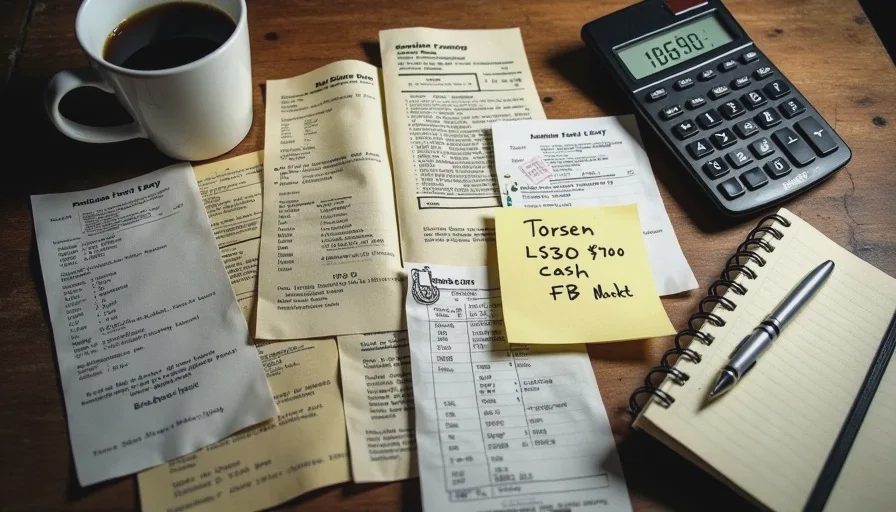
The $1.27 Line Item
There's one number in this spreadsheet that matters more than the total. It's in the "Small Stuff" category, dated September 2021. The entry reads:
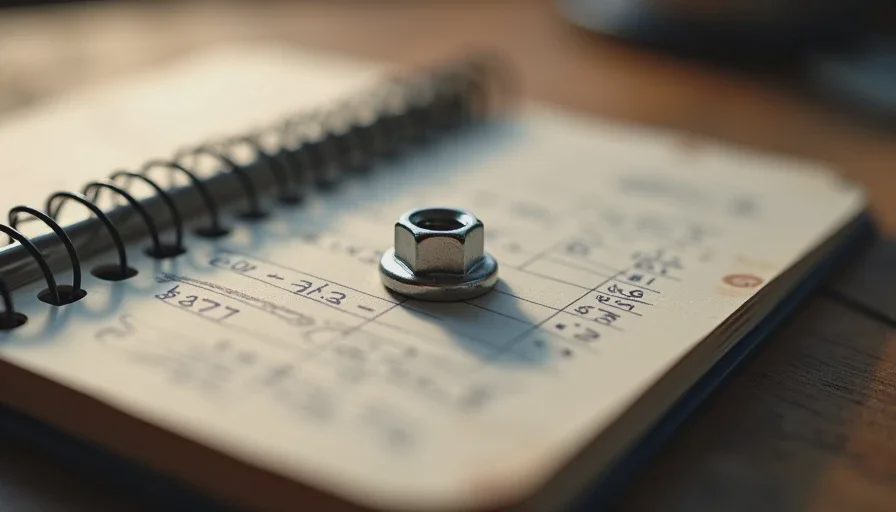
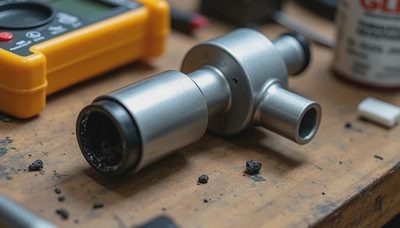
"M6x1.0 flange nut, quantity 1 — $1.27"
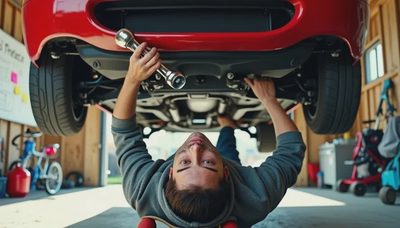
I was reinstalling the Miata's front undertray after an oil change. The undertray is held on by ten M6 bolts with flange nuts. I dropped one of the nuts into the gravel of my driveway and couldn't find it. I spent fifteen minutes on my hands and knees with a flashlight before giving up. Then I drove to Home Depot, bought a single flange nut for $1.27, drove home, and finished the job.
That $1.27 is the only honest number in the entire spreadsheet.
Here's why: every other number has a story attached to it, a justification, a narrative. The $1,895 MCS coilovers were "an investment in handling." The $895 roll bar was "a safety item." The $700 Torsen LSD was "a transformative driving experience." I can explain every one of those purchases in a way that makes them sound reasonable, even necessary.
But the $1.27 flange nut is different. It's not an upgrade. It's not a performance modification. It's not something I can write a blog post about. It's just a small, unglamorous piece of metal that I needed because I dropped the original one in the gravel. The $1.27 doesn't make the car faster or safer or more fun to drive. It just makes the car whole again, the way it was before I took it apart.
The $1.27 is the cost of the hobby stripped of all its marketing and aspiration. It's the cost of taking something apart and putting it back together, over and over, because that's what you do when you own a project car. The big numbers — the coilovers, the roll bar, the differential — are why you start. The $1.27 is why you stay.
Why I Delete the Spreadsheet Every Year
I've been asking myself this question for four years. Here's what I've come up with:
The spreadsheet is a mirror I don't want to look into. It reflects decisions I made with my heart, not my head. Nobody needs MCS coilovers on a car worth $4,200. Nobody needs a lightweight flywheel that chatters at stoplights. These are want-based purchases, justified after the fact with logic that doesn't hold up under scrutiny. The spreadsheet, with its cold, indifferent rows and columns, doesn't care about my justifications. It just adds the numbers together.
The spreadsheet makes the invisible visible. Every track day costs more than the entry fee. Every mod has downstream costs — the alignment after the coilover install, the tire wear from the aggressive camber setting, the upgraded brake pads that wear out rotors faster. The spreadsheet connects these dots, and the picture it draws is more expensive than the one in my head.
The spreadsheet is a conversation I don't want to have with Jenn. She's never asked to see it. She's never questioned a purchase. She trusts me to manage the car budget responsibly, and for the most part, I do. But I know that if she saw the $10,690 total, she'd do the math on what else that money could have funded. A family vacation. A semester of Lily's college fund. A new appliance that isn't held together by hope and the one YouTube tutorial I watched three years ago. She wouldn't be angry. She'd just be curious. And I don't have a good answer for that curiosity.
But here's the thing I've realized while writing this post: deleting the spreadsheet doesn't delete the experience. The $10,690 bought me something that a savings account never could. It bought me 347 laps of Barber Motorsports Park (and counting). It bought me an SCCA trophy that sits on Jenn's bookshelf. It bought me weekends in the garage with Max handing me the wrong socket and Lily asking if the car would be "lower like a race car." It bought me the 19-minute drive from my house to the track, the smell of hot oil and brake dust, the moment when Turn 14 finally — briefly — feels right.
That's not a justification. It's just the truth. The spreadsheet contains the cost. It doesn't contain the value.
This Year, I'm Not Deleting It
I'm publishing it instead.
Not because I'm proud of the total. I'm not. $10,690 is a lot of money. It's more than I'd have guessed if you'd asked me before I did the math. It's more than I'd recommend anyone spend on a thirty-year-old Mazda without being honest with themselves about what they're getting into.
But it's also real. It's the actual cost of building a car I can race — not a car that wins every weekend, not a car that impresses anyone in the paddock, but a car that shows up, session after session, and lets me chase lap times and make mistakes and learn things I couldn't learn any other way.
If you're thinking about building a track Miata, here's my actual advice: it will cost more than you think. Not because any individual part is outrageously expensive, but because the parts never stop. There's always a "while you're in there." There's always a "I might as well upgrade while I'm replacing it." There's always a $1.27 flange nut that you dropped in the gravel and have to buy again.
Budget for the big stuff — suspension, safety, tires. Then add 30% for everything else. Then accept that you'll exceed even that number, and decide now whether the experience is worth the cost. For me, it is. For you, it might not be. Both answers are valid.
Now I'm going to save this spreadsheet, close the laptop, and go to the garage. The Miata needs an oil change before the next track day. That's another $40 I won't log.
What's the real total on your build — the one you don't tell people at car meets? Reply and confess. I've shown you mine. It's only fair.

No letters yet — pray write the first.