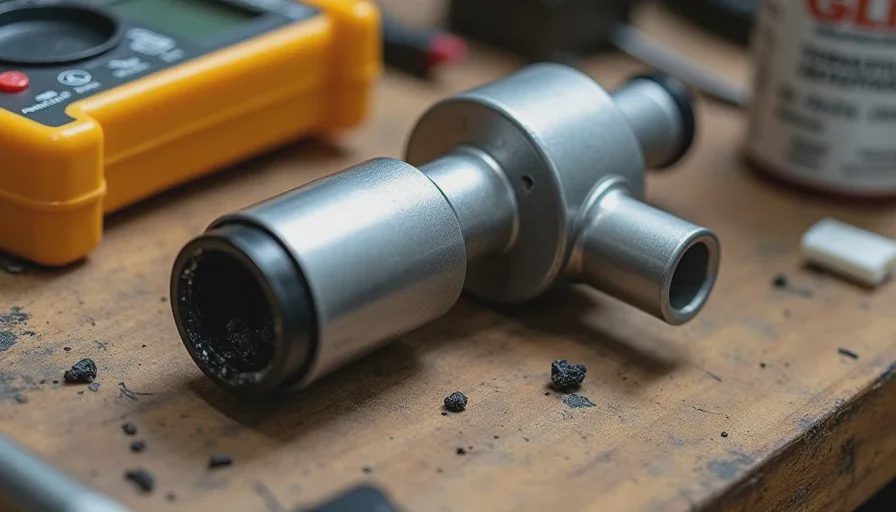
My NA Miata developed a rough idle in the fall of 2023. It wasn't dramatic — just a gentle, rhythmic surging at stoplights, the tach needle wavering between 800 and 1,100 RPM like it couldn't make up its mind. Lily asked if the car was "breathing funny." Max said it sounded like a motorcycle that forgot it was a car. I told myself it was probably a vacuum leak, or maybe the spark plugs, or maybe just the Miata being a thirty-year-old car with feelings. I was wrong on all three counts. The real culprit was the idle air control valve — the little stepper-motor-controlled air bypass on the intake manifold that the ECU uses to manage idle speed. And according to Reg, it wasn't broken. It was lying.
This is a story about a $15 junkyard part, a five-minute diagnosis, and seven words from Reg that I will never forget.
The Symptoms: What a Failing IAC Valve Sounds Like
The Miata's idle had been acting up for about three weeks before I did anything about it. Here's what I was experiencing:
Cold start idle surge: On startup, the RPMs would shoot to 1,500, then drop to 900, then bounce back up to 1,300, then settle — sometimes — around 850 after 30 seconds. Other times, it kept hunting.
Idle droop when coming to a stop: Clutch in, coasting to a red light, and the tach would dip below 600 RPM like the engine was about to stall. It caught itself every time, but my right foot developed a nervous habit of blipping the throttle just in case.
Electrical load sensitivity: Turn on the headlights or the rear defroster, and the idle would stumble for a moment before recovering. This was a clue, but I didn't recognize it at the time.
No check engine light. The ECU wasn't flagging anything. That's important. A lazy IAC valve doesn't always throw a code on an OBD1 car. The ECU just thinks the valve is doing what it's told.
I consulted the usual forums. r/Miata had seventeen threads about rough idle. The suggestions ranged from "clean your throttle body" to "check your timing" to "it's just an old car, learn to live with it." I tried the first two. The third started to feel like the correct answer, which is how I knew I needed Reg.
My DIY Diagnosis (And Why It Was Wrong)
Before I drove to Reg's shop, I spent a Saturday attempting to fix the problem myself. This is what I did, and why none of it worked.
1. Cleaned the Throttle Body
The Miata's throttle body had 130,000 miles of carbon buildup. I removed the intake tube, sprayed half a can of throttle body cleaner onto a rag, and scrubbed the butterfly valve and bore until they shined. Result: no change. The idle surge was still there. Throttle response felt slightly crisper, which I chose to interpret as a partial victory, but the actual problem remained unsolved.
2. Checked for Vacuum Leaks
I sprayed carb cleaner around every vacuum hose, intake manifold gasket, and injector seal I could reach while the engine was running. The theory: if the idle changes when you spray a leak, you've found it. The reality: no change. I even replaced two vacuum hoses that looked slightly cracked. Still no improvement.
3. Adjusted the Idle Screw
The NA Miata has a mechanical idle adjustment screw on the throttle body. I jumped TEN and GND in the diagnostic box, set the base idle to 850 RPM per the factory manual, and removed the jumper. The idle surged again within fifteen seconds of driving. That told me something: the ECU was trying to control the idle via the IAC valve, and the valve wasn't cooperating.
4. Replaced the Spark Plugs and Wires
I was due for plugs anyway. NGK copper plugs and blue NGK wires — the standard Miata forum prescription. The car ran smoother at highway speeds. The idle surge remained. That's when I texted Reg: "Rough idle, no CEL, already cleaned TB and checked for leaks. Still surging." His reply arrived twelve minutes later: "Bring it in. Don't buy anything first."
Reg's Five-Minute Diagnosis
Reg's shop is in a strip mall in Hoover, between a vape shop and a dry cleaner. The sign on the door says "Harmon Engine Services" in vinyl lettering that's been peeling since before I met him. Inside, there's a single lift, an engine stand with a partially disassembled K-series on it, and a whiteboard covered in Reg's handwriting — mostly fuel map notes and one drawing of a stick figure with an arrow through its head labeled "CUSTOMER'S O2 SENSOR."
I pulled the Miata into the bay. Reg didn't ask what was wrong. He'd read my text. He walked to the driver's side, reached through the open window, and started the engine. Then he stood there, hands in the pockets of his Dickies, watching the tach needle drift up and down.
"Turn the headlights on," he said.
I did. The idle stumbled, then recovered.
"Now the defroster."
Same result.
"Turn the A/C on."
The compressor kicked in, the idle correction circuit engaged, and the RPMs actually stabilized for a moment — then started surging again.
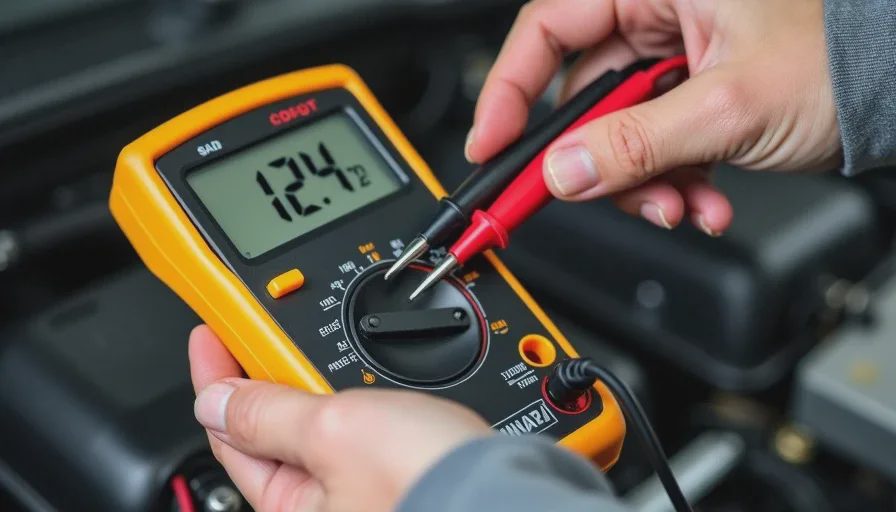
Reg nodded. He reached into his tool cart, pulled out a multimeter, and popped the hood. He unplugged the IAC valve connector — a two-wire plug on the side of the intake manifold — and touched the meter probes to the valve terminals. The reading: 12.4 ohms.
"Spec is 11.5 to 12.5," I said, because I had read the service manual.
Reg didn't look up. "Resistance is fine. The valve's still lying."
Then he said the seven words I will never forget:
"It moves, but it doesn't go where it's told. "
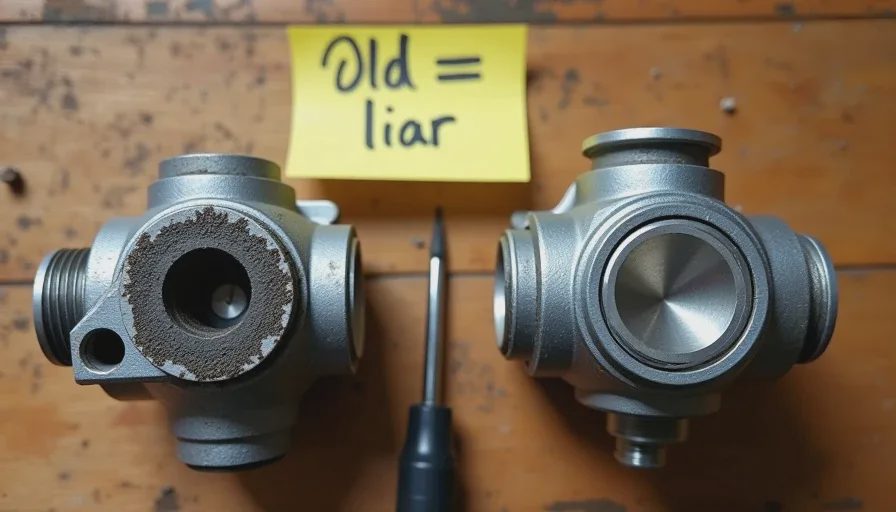
He explained it like this: the IAC valve is a stepper motor. The ECU sends it pulse signals to move a plunger in and out of a bypass passage, controlling how much air skips the throttle plate at idle. Over time, carbon and oil vapor from the PCV system build up inside the valve body. The plunger starts to stick. It might move when the ECU tells it to, but it doesn't move exactly the right amount, or it moves too slowly. The ECU sees the idle speed is wrong, sends another correction, overshoots, pulls back, and the whole system oscillates. The valve isn't dead. It's just inaccurate. It's lying.
"The multimeter can't measure a lie," Reg said. "Only the engine can."
The Fix: Replace, Don't Clean
I asked Reg if we could just clean the valve. He said we could try. We removed the IAC valve — two bolts, one gasket, a fair amount of swearing at the coolant line that runs through the throttle body — and sprayed it with throttle body cleaner until the fluid ran clear. We reinstalled it. We started the engine. The idle was better for approximately four minutes. Then the surge came back.
"Once the plunger wears a groove in the bore," Reg said, "cleaning it just makes it a clean bad valve."
He walked to a shelf in the back of the shop and came back with a used IAC valve in his hand. "Came off a '96 with 80,000 miles. Tested it last week. Works."
The Cost Breakdown
Item | Cost |
|---|---|
Used IAC valve (tested) | $15 |
Throttle body gasket (new) | $6 |
Labor (Reg's shop rate × 0.5 hours) | $40 |
Total | $61 |
For reference: a new OEM IAC valve for a 1.8L NA Miata costs between $250 and $400, depending on where you look. Aftermarket units are available for around $80 to $120, but the Miata forums are full of stories about aftermarket IAC valves failing within a year. Reg's philosophy: "A used factory part that tests good is better than a new aftermarket part that's never been tested at all."
We installed the replacement valve, started the engine, and the idle settled at 850 RPM within ten seconds. No surge. No hunting. No dip when I turned the headlights on. The Miata idled like a sewing machine. I sat in the driver's seat, blipping the throttle and watching the tach needle snap back to exactly 850, and felt a disproportionate amount of satisfaction for a man who just spent $61 on a thirty-year-old air valve.
What I Learned (Besides the IAC Valve Part Number)
1. Resistance Isn't the Whole Story
I measured 12.4 ohms and assumed the valve was electrically healthy. It was. The coil was fine. The mechanical side — the plunger, the bore, the spring — was worn. A multimeter can tell you if a solenoid is dead. It can't tell you if a stepper motor is sticking half a millimeter off its target position. For that, you need to observe the engine's behavior under electrical load and recognize the pattern.
2. Electrical Load Is a Diagnostic Tool
Reg's first three requests — headlights, defroster, A/C — were a deliberate diagnostic sequence. When you add electrical load, the alternator drags on the engine, idle drops, and the ECU compensates by commanding the IAC valve to open further. If the valve responds correctly, idle recovers smoothly. If the valve is sticky or inaccurate, the recovery is messy — surging, overshooting, dipping. I didn't know this test existed. Now it's the first thing I'll do if any car I own develops an idle problem.
3. Sometimes the Cheap Fix Is the Right Fix
I spent three weeks chasing vacuum leaks, cleaning throttle bodies, and adjusting idle screws. The actual solution was a $15 part and a mechanic who knew that the ECU's commands are only as good as the hardware executing them. I'm not saying every idle problem is an IAC valve. I'm saying that if your car has a stepper-motor IAC valve and the symptoms match what I described, don't spend three weeks on the other stuff before you test the valve. Or better yet, take it to someone who already knows.
Reg's seven words have become a kind of diagnostic mantra in my garage. "It moves, but it doesn't go where it's told." I've said it to myself while diagnosing a sticky brake caliper, a lazy thermostat, and once, memorably, a Shop-Vac that wouldn't pick up Cheerios. It applies to more than just idle air control valves.
Does your car have an idle problem you've been chasing? Have you cleaned everything, adjusted everything, and still ended up with a surging tach at stoplights? Tell me about it. And if you've got a Reg in your life — a mechanic who can diagnose a lying sensor in five minutes — buy that person lunch. They're worth more than any forum thread.




No letters yet — pray write the first.