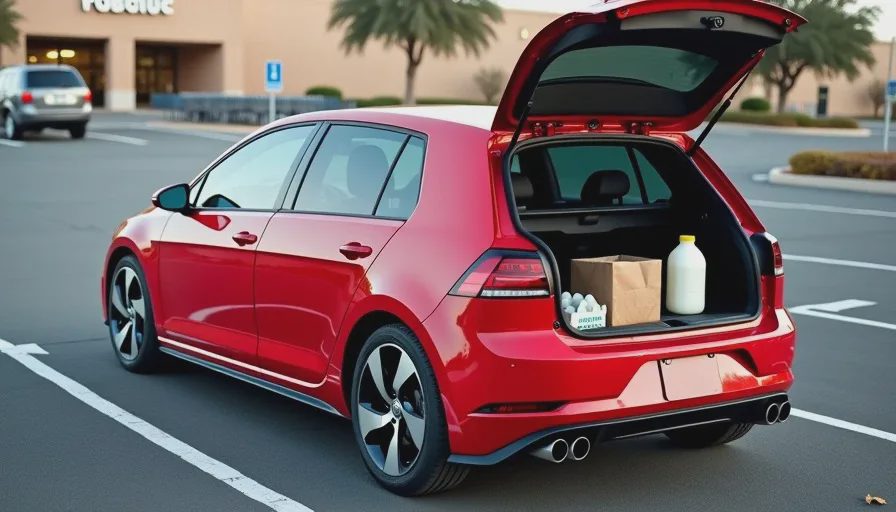
Every Saturday morning, I do the grocery run. It's not a glamorous drive. It's 2.3 miles from my front door to the Publix on Greensprings Highway, four stoplights, one left turn across traffic that takes longer than it should, and a parking lot where the cart corral is always one row farther than you think. I could take the Sienna. Jenn's keys are on the hook by the door. But I take the GTI. Every single week. Because the cold air intake sound — that hollow, rushing inhale followed by the faintest whisper of recirculation — is the best part of my Saturday morning, and it costs me exactly nothing beyond the $247 I spent on the intake itself eighteen months ago. This is a full GTI cold air intake review disguised as a grocery list. Let's get into it.
What a Cold Air Intake Actually Does (And Doesn't Do)
Let's get the honest part out of the way first. If you're buying a cold air intake expecting horsepower gains, I have good news and bad news. The good news: you might see 5 to 8 horsepower at the wheels on a turbocharged car like the Mk7.5 GTI, assuming the intake is actually drawing cooler air and your ECU is taking advantage of it. The bad news: you will not feel 5 to 8 horsepower. The butt dyno is a liar. I have data logs that say the car is faster, and I have a right foot that says it feels identical.
What you will feel — or rather, hear — is the sound. And the sound is transformative.
The Sound Nobody Warns You About
On a stock GTI, the intake is muffled to near-silence. Volkswagen engineers spent real money making sure you don't hear the turbo spool, the diverter valve, or the rush of air entering the engine. It's refined. It's adult. It's exactly what you'd expect from a car that shares a platform with the Audi A3.
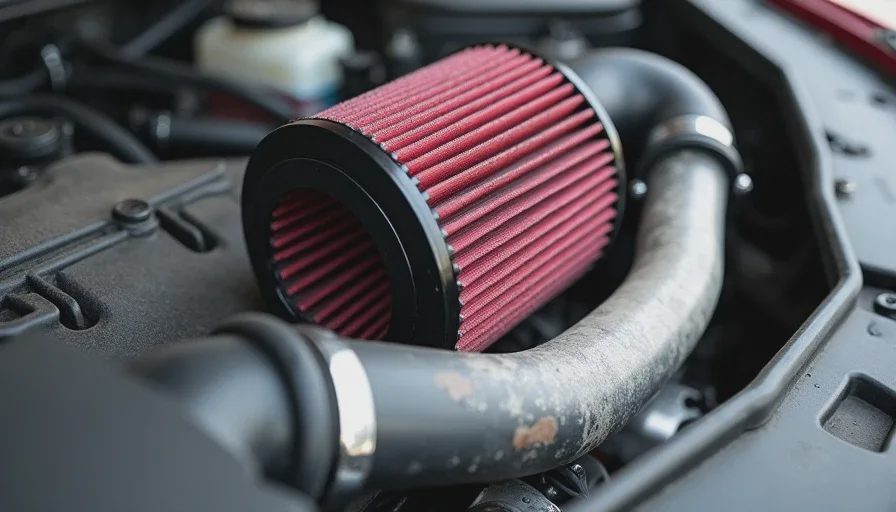
Remove the factory airbox and replace it with an open-element intake — in my case, the Integrated Engineering V2 cold air intake, $247 shipped — and suddenly the car has a personality. Lift off the throttle after building boost, and you get a sharp pssshhh that makes Max, my five-year-old, whip his head toward the window and say "ghost." Floor it in second gear merging onto I-65, and the intake growl fills the cabin like there's a very angry vacuum cleaner living under the hood. It's childish. It's unnecessary. I love it.
Here's a more specific breakdown of what you hear and when:
Driving Condition | Sound |
|---|---|
Light throttle, low RPM | Nearly stock — maybe a faint whistle if the radio is off |
Half throttle, building boost | Deep inhale, gets louder as RPMs climb |
Full throttle, 3,000–5,500 RPM | Loud induction roar, turbo spool clearly audible |
Throttle lift (diverter valve) | Sharp pssshhh, louder with windows down |
Cold start idle | Slightly louder intake hiss, settles after 30 seconds |
None of this makes the car faster. I need to say that again because intake manufacturers are very good at implying otherwise. The IE intake claims a 5–8 hp gain, and I believe them in the sense that a dyno probably showed that number on a specific car on a specific day. On my car, in Alabama, with 93-octane and a custom tune from Reg, I'm sure the intake is contributing something. But what I paid for — what I use every single day — is the noise.
The Grocery Run Test: Why Sound Matters More Than Power
Here's the thing about a 600-horsepower build. You can't use 600 horsepower on a grocery run. You can't use it merging onto the highway without risking a conversation with a state trooper. You can't use it at a stoplight without looking like you're trying to prove something. Power, above a certain threshold, is a theoretical asset — it exists on a spec sheet and maybe on a track day, but it doesn't exist between your house and the Publix.
Sound, on the other hand, is always accessible. The intake whoosh costs zero miles per hour. It happens at 25 mph in second gear just as much as it happens at 70 mph in fourth. It's the one performance modification that delivers its full experience within the legal speed limit.
This is my actual argument for the cold air intake as a daily driver mod. Not the power. Not the "throttle response" that every forum post mentions and nobody can actually define. The sound. The sound makes every drive feel like an event, even when the event is "buying milk and eggs and those frozen pancakes Max insists on."
What Max Thinks
I should include Max's review here because he's the only passenger who's been consistently present for the intake's entire service life. His verdict, delivered unprompted from the back seat during a trip to Home Depot: "Your car sounds like Darth Vader when you step on the gas."
I told him that was correct. He asked if Darth Vader was in the engine. I said no. He seemed disappointed.

Installation: One Hour, Zero Cuts, One Skinned Knuckle
If you're on the fence about installing a cold air intake yourself, here's the good news: on the Mk7.5 GTI, it's a one-hour job with basic hand tools. You do not need to cut anything. You do not need to remove the front bumper. You do not need to drain any fluids. You need a flathead screwdriver, a T25 Torx bit, a 10mm socket, and enough patience to unclip two wiring harness connectors without breaking the plastic tabs.
The Integrated Engineering intake came with printed instructions that were actually legible, which is rarer than it should be in the aftermarket parts industry. The aluminum heat shield mounts to factory locations. The silicone couplers fit snugly over the turbo inlet. The only moment of genuine difficulty was reaching the lower airbox mounting grommet, which is tucked behind the passenger-side headlight and requires you to contort your hand into a shape that hands were not designed to make. That's where the skinned knuckle came from. I bled on the airbox. I consider it a bonding moment.
A tip the instructions don't include: disconnect the battery negative terminal before you start. The ECU will reset its fuel trims after reconnection, which means the car will learn the new intake's airflow characteristics from a clean slate. It'll run a little rough for the first five minutes of driving. That's normal. Don't panic.
One Year Later: Did Anything Break?
The intake has been on the car for roughly 15,000 miles. Here's the maintenance log, such as it is:
Filter cleaning: I cleaned and re-oiled the filter at the 10,000-mile mark. IE recommends every 15,000 to 20,000 miles for daily-driven cars, but I checked it early because Alabama pollen season is basically a yellow fog for six weeks every spring. The filter was dirtier than I expected. Clean yours sooner if you live somewhere with actual seasons.
Heat soak: There's a persistent forum debate about whether open-element intakes suffer from heat soak in stop-and-go traffic. I've watched my intake air temperatures on the Accessport. In August, sitting at a long light on Lakeshore Drive, IATs climb about 15–20°F above ambient. Once the car is moving, they drop back down within 30 seconds. This is not a real problem for a daily driver. If you're chasing lap times, get a closed-box intake or stick with the stock airbox. For everyone else, don't overthink it.
Check engine light: Zero. No issues. The IE intake uses the factory MAF housing diameter, so the ECU reads airflow correctly without needing a tune adjustment. Reg confirmed this when he did my custom tune — the fuel trims were within normal range with the intake installed, which is not always the case with cheaper open-element intakes that use an incorrect MAF housing size.
Is It Worth It? The Spreadsheet Answer
Here's the cost breakdown, because I promised you real numbers:
Item | Cost |
|---|---|
Integrated Engineering V2 Cold Air Intake | $247.00 |
Shipping | Free (IE runs promos regularly) |
Installation tools (already owned) | $0 |
Band-Aids (one skinned knuckle) | $0.25 |
Total | $247.25 |
For comparison: a cat-back exhaust for the GTI starts around $600 and goes north of $1,200. A downpipe and Stage 2 tune package is $1,500 minimum. An intercooler upgrade is $700 to $900 before installation. The cold air intake is, dollar for dollar, the cheapest way to transform the car's personality without touching anything irreversible.
Is it worth it for power? No. Buy a downpipe and a tune if you want power.
Is it worth it for the experience? Every single Saturday morning, when I lift off the throttle at the Greensprings Highway light and hear that pssshhh, and Max says "ghost" from the back seat — yes. Yes it is.
Now if you'll excuse me, I need to go. The eggs are in the hatch, the milk is in the passenger footwell because I forgot the trunk organizer again, and Darth Vader is waiting under the hood.
What's the one mod you did that made zero horsepower but you'd do again in a heartbeat? Reply and tell me. I'm collecting data for a theory I have about car enthusiasm being 80% sensory and 20% everything else.




No letters yet — pray write the first.