Last Saturday, a neighbor stopped me beside his driveway with a printout from a used-car dealer. The advertised SUV was $18,995. His contract showed $23,418. He wanted to know where the extra $4,423 came from. That is why the used car out the door price matters more than the number in the online ad. The out-the-door figure is what you actually pay to take the vehicle home, including the sale price, taxes, title, registration, dealer fees, and any products added to the deal.
A payment of $399 can hide a very different total. A dealer can stretch a loan to 72 months, lower the monthly number, and make a $20,000 vehicle look affordable while charging interest on a much larger balance. You need the receipt, not the menu presentation. I told you what they told me to say. Now you know.
What belongs in the out-the-door number
Start with the negotiated selling price. If the vehicle is listed at $19,500 and you agree to $18,700, that $800 reduction is real. Get it written down before discussing financing or a trade-in. Otherwise, the conversation can shift between monthly payment, trade value, and price until nobody can tell which number changed.
Next come government charges. Sales tax depends on your state and local area. Title and registration fees pay for the paperwork and license plates. These are not dealer profit, although the exact amount depends on where you register the car. A documentation fee is different. It covers dealer paperwork and can range from roughly $100 to more than $500 depending on the store and state.
Then look for optional products. A service contract, tire-and-wheel coverage, paint protection, key replacement, GPS tracker, or theft protection can add $500 to $3,000. None should be quietly bundled into your used car out the door price. If you did not request it, ask for the line to be removed and recalculate the contract.
The math behind a real example
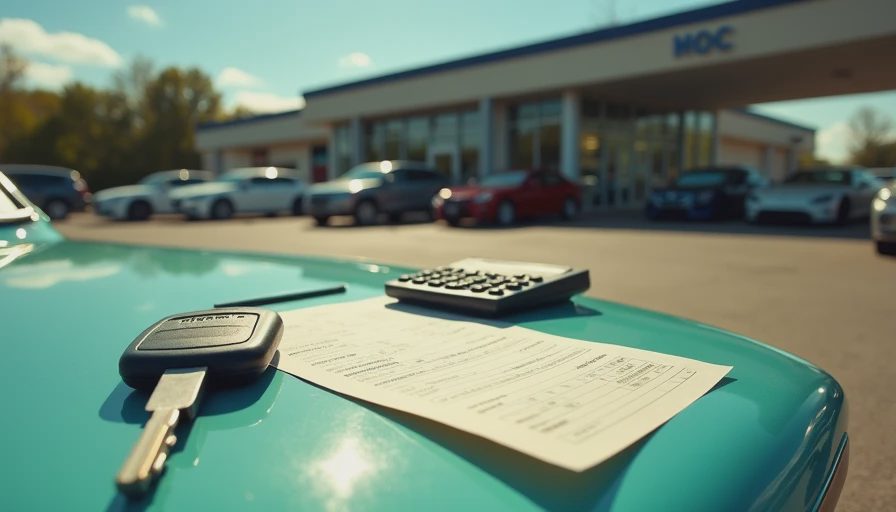
Take a $17,900 used Toyota Camry. Suppose the negotiated price is $17,400 after a discount. Add an estimated $1,218 in sales tax, $185 for title and registration, and a $299 documentation fee. The used car out the door price is now $19,102 before financing.
Now imagine the finance manager adds a $1,295 service contract and a $795 theft-marking package. The balance rises to $21,192. If you finance that amount for 60 months at 9 percent, the payment is roughly $440, and the total of those payments is close to $26,400. The advertised vehicle was $17,900. You could end up paying about $8,500 more than that sticker number after products and interest.
The person who pockets each dollar matters. Sales tax goes to the government. Registration goes to the state or county. The documentation fee goes to the dealer. Optional protection products create profit for the dealer, the finance office, or the product provider. Interest goes to the lender. That breakdown is not complicated, but it gets blurry when someone only shows you the payment.
Ask for a buyer's order showing the selling price, every fee, every product, the amount financed, and the total cost of payments. If the salesperson says the worksheet is not available until you commit, slow down. You are not asking for secret information. You are asking what you are buying.
Fees that deserve a question
A documentation fee is common, but common does not mean invisible. Ask whether it is fixed by state rules or set by the dealership. A market adjustment or dealer preparation fee deserves the same treatment. Used cars do not need a mysterious $1,200 preparation charge just because the vehicle was washed and photographed.
Watch for duplicate charges. You might see a title fee, registration fee, electronic filing fee, and plate fee. Some can be legitimate, but the dealer should explain each one in plain English. If two lines appear to pay for the same government service, ask for the statutory amount and the dealer's separate charge.
Do not confuse a deposit with a fee. A refundable deposit should be described in writing. A nonrefundable deposit can cost you if the deal falls apart. Before sending money by text or online link, read the purchase agreement and confirm the refund terms.
The used car out the door price should also identify your trade allowance separately. If your old vehicle is worth $8,000 and the dealer gives you $8,000, that is not the same as selling it for $8,000 and paying off a $9,500 loan. The $1,500 payoff shortage still has to be handled, and rolling it into the new loan makes the replacement car more expensive.

Cash, financing, and the payment trap
A cash buyer still pays the vehicle price, taxes, registration, and dealer charges. Financing does not change the negotiated price unless the dealer is offering a lender rebate with specific conditions. The interest is separate from the used car out the door price, but it changes what the car costs you over time.
For example, financing $20,000 for 60 months at 8 percent costs about $406 per month, or approximately $24,360 in payments. At 12 percent, the payment is about $445, and the total is near $26,700. That $2,340 difference does not improve the Camry, repair a tire, or add resale value. It pays the lender for the loan.
Get preapproved through a bank or credit union before visiting the dealership. A preapproval gives you a rate to compare against the dealer's offer. Progressive, State Farm, and GEICO are familiar insurance names, but they are not substitutes for a financing quote; auto insurance and an auto loan are separate decisions. Leave room in your budget for insurance, fuel, maintenance, and an emergency repair.
If the dealer asks what payment you want, answer with the total price first. You can say, "Show me the used car out the door price with no optional products. We can discuss financing after that." That sentence keeps the deal on one piece of paper.
A simple inspection and paperwork checklist
Before signing, match the vehicle identification number on the contract to the dashboard and title documents. Check the mileage, model year, trim, and equipment. A $21,000 price for an XLE is not the same deal as $21,000 for a base trim with fewer safety features.
Review the vehicle history report, but do not treat it as a mechanical inspection. Have an independent mechanic check the tires, brakes, leaks, battery, cooling system, and scan codes. A $150 inspection can uncover a $1,500 brake and tire bill. Ask whether the car is being sold as-is or with a limited warranty, and get the answer in writing.
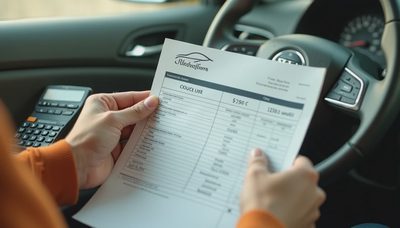
On the contract, circle the cash price, trade allowance, payoff balance, taxes, government fees, dealer fees, optional products, down payment, amount financed, annual percentage rate, loan term, and total payments. Compare the printed numbers with your notes. A missing warranty cancellation form or an unexplained add-on is a reason to pause, not a reason to hurry.
The final used car out the door price should not change because you asked to read the contract. If the number changes, ask what line changed and why. You can walk away before signing; after signing, fixing a bad deal becomes much harder.
What to do at the dealership
Bring your driver's license, insurance information, preapproval details, and a calculator. Call your insurer for an actual quote on the vehicle before you buy it. A used luxury SUV can have a $220 monthly insurance bill when you budgeted for $140, and that difference matters over a 60-month loan.
Send the dealer a short request before your visit: "Please email the buyer's order showing the selling price, taxes, title and registration, documentation fee, all optional products, trade allowance, payoff, and total amount due." If they send only a monthly payment, ask again for the itemized buyer's order.
Compare two or three written offers using the same vehicle price, fees, down payment, and loan term. Do not compare a $2,000 down deal with a zero-down deal and call the lower payment cheaper. You are comparing different amounts financed.
When the numbers finally make sense, pay attention to the exact amount due at signing and the first payment date. Take a photo of the signed buyer's order and keep every cancellation form. Then ask one last question: "Is this the complete used car out the door price, including every required charge and every product I agreed to?" Get the answer in writing. That is the line that protects your wallet.




No letters yet — pray write the first.